

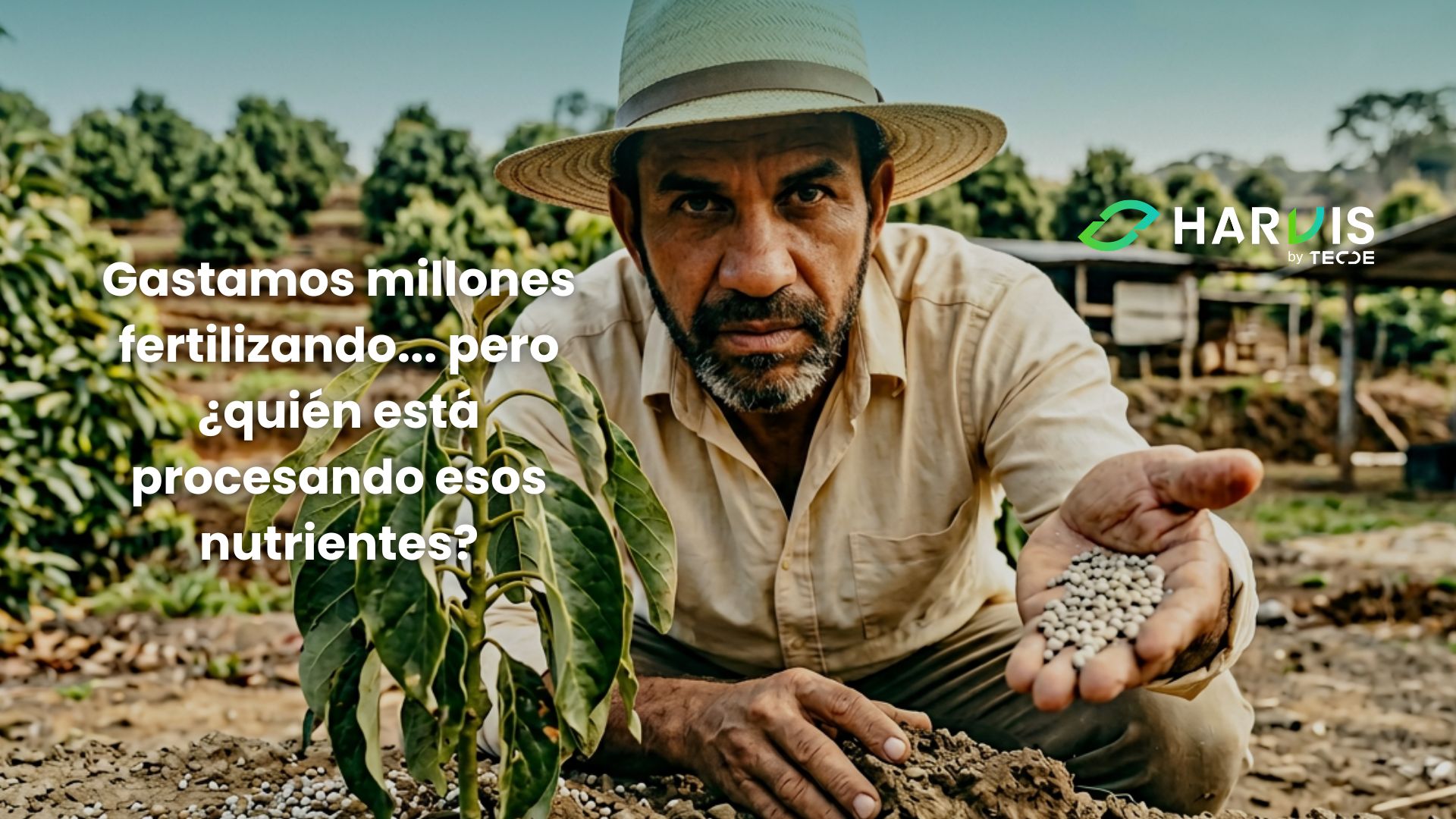
Every bag of fertilizer you buy may contain nutrients that are already in your soil, just in forms that your plants cannot use. I have seen it on farms across the country: producers buying DAP when they have blocked phosphorus, applying potassium chloride when there is immobilized potassium in clays, adding urea when nitrogen-fixing bacteria are dead or absent. The problem is not always the lack of nutrients; it is the absence of the microorganisms that convert them into available forms.
A gram of healthy soil contains between 100 million and a billion bacteria, over a million fungi, and thousands of other microorganisms. This invisible biomass represents a biochemical machinery so sophisticated that no synthetic fertilizer can replicate it. But in soils degraded by decades of excessive tillage, monocultures, and indiscriminate use of agrochemicals, it is very likely that this biological factory is turned off or operating at minimal capacity, and in the meantime, we continue to pay large sums of money for nutrients we already had but did not know how to make available.
Fertilizers account for between 30% and 40% of variable costs in most intensive agricultural systems; the most delicate part of the matter is that a significant portion of that investment is lost because the soil lacks the biological capacity to process, retain, and deliver those nutrients efficiently to the plants, and often we do not know it and perhaps do not understand why we apply them and it seems they do not work.
As we analyzed in our article on tired soils, the problem is not only physical or chemical. The biological degradation of soil is perhaps the most silent, but also the most costly. When we destroy the soil microbiology with inadequate practices, we not only lose organisms; we lose essential functions that determine whether our investment in fertilizers translates into production or simply washes away with the first heavy rain.
Read our article: Tired Soils: The Silent Bill of Decades of Poor Technical Decisions

The Invisible Workers: Who They Are and What They Do
The soil microbiology is not an abstract laboratory concept. They are specific functional groups that perform concrete and quantifiable jobs that have a directly proportional relationship with the reduction of fertilization costs. Understanding who they are and what they do is the first step to stop over-fertilizing due to ignorance of the biological functions that occur at the soil ecosystem level.
Arbuscular mycorrhizae are probably the most important group and, paradoxically, the one I have perceived to be the least used in conventional fertilization. These fungi form symbiotic associations with more than 80% of cultivated plant species, effectively extending roots up to 100 times their original reach. Their main function is phosphorus capture, the least mobile nutrient in the soil and, therefore, the most difficult to utilize without biological help. Mycorrhizal hyphae can explore micropores in the soil that roots never reach, solubilizing inorganic phosphorus and transporting it directly to the plant. In systems with active mycorrhizae, phosphorus absorption efficiency can increase between 60% and 80%, which in practical terms means you can reduce DAP or diammonium phosphate applications by up to 50% while maintaining the same productive levels.
An example of this was reflected with a coffee grower in Quindío who reduced his DAP application from 10 to 4 bags per hectare after using and inoculating native mycorrhizae and adjusting his management practices. The difference was not immediate, but after two production cycles, the response was the possibility of obtaining similar production with less than half the cost in phosphorus fertilization. That, on a 5-hectare farm, represents an annual savings of nearly $3,000,000. It is not a change of variety, it is not cutting-edge technology; it is simply reactivating a biological function that was dormant and putting the soil microorganisms to work in your favor.
Phosphorus and potassium solubilizing bacteria are another key functional group. While mycorrhizae extend the reach of roots, these bacteria chemically transform blocked nutrients. Phosphorus in acidic soils is fixed with aluminum and iron, forming insoluble compounds that plants cannot absorb. In alkaline or calcareous soils, it is fixed with calcium-based amendments, generating the same problem. Bacteria of the genera Bacillus, Pseudomonas, and Burkholderia, among others, produce organic acids that solubilize these compounds, releasing available phosphorus without the need for additional applications.

With potassium, something similar happens; soils, especially of volcanic origin, contain significant amounts of potassium trapped in feldspar and mica structures. Plants cannot access that potassium, so we continue applying potassium chloride year after year. However, potassium solubilizing bacteria can mobilize between 15% and 25% of the total potassium in the soil, converting it into exchangeable forms that roots can absorb. Economically, this can represent a 30% reduction in potassium fertilizer applications, which in demanding crops like plantain or banana translates into savings of over $400,000 per hectare per year.
Biological nitrogen fixers are perhaps the best known but the least utilized outside of leguminous systems. Bacteria of the genus Rhizobium form nodules on the roots of legumes, fixing atmospheric nitrogen that the plant uses directly. But there are also free-living fixers like Azotobacter and Azospirillum, capable of providing between 20 and 40 kg of nitrogen per hectare per year without the need for external applications. In well-managed cover systems, this fixation can cover between 20% and 30% of the nitrogen needs of the main crop, proportionally reducing the use of urea or nitrogen fertilizers.
In livestock, the strategic use of tree and creeping legumes in silvopastoral systems can provide significant amounts of nitrogen to the system without high fertilizer costs. According to a study conducted by the Central University of Venezuela, they reduced their urea application to pastures by more than 40% by incorporating Leucaena leucocephala and Clitoria ternatea into their pastures. The key is not just to plant the legumes but to understand that their effectiveness depends on keeping the Rhizobium population alive and active in the soil, which requires management practices that do not destroy that biology.
The ROI of the Invisible: Numbers That Justify the Change
Talking about microbiology sounds technical, almost academic. But when you translate it into dollars per hectare, the conversation changes radically. The return on investment of a strategy based on biological activation of the soil is not only positive; in many cases, it is higher than any other technical intervention we can make.
Let’s take the example of diammonium phosphate. A bag of DAP costs around COP$227,000 and contains approximately 18% nitrogen and 46% phosphorus. In a conventional coffee system, between 8 and 12 bags are applied per hectare per year, representing an investment of COP$1,816,000 to COP$2,724,000 just in this fertilizer. Now, if through inoculation with mycorrhizae and solubilizing bacteria we manage to reduce that application by 50% without affecting production, we are saving between COP$1,808,000 and COP$1,362,000 per hectare.
The investment in quality microbiological inoculants is around COP$80,000 to COP$120,000 per hectare in the first application, with annual maintenance reapplications close to COP$40,000. Even being conservative, the return is 5 to 1 in the first year and 15 to 1 in subsequent years, as long as management practices do not destroy the reintroduced biology. Few agricultural inputs offer that level of return.
In Hass avocado, where nutritional demands are high and fertilization can easily exceed $2,500,000 per hectare, the biological activation of the soil can generate even more significant savings. The key is to combine mycorrhizal inoculation, incorporation of good quality compost, reduction of tillage, and elimination of systemic fungicides that were killing native mycorrhizae. The annual savings can easily exceed $700,000 per hectare, and most importantly: production not only remains stable but improves in terms of fruit quality and stability between seasons.
But ROI is not only measured in fertilizer reduction; a soil with active microbiology retains water better, reduces nutrient leaching, improves physical structure, and increases system resilience against water and phytosanitary stress. All of this has economic value, even if it is more difficult to quantify directly. A crop that does not lose production in a prolonged summer because its soil has better structure and greater water retention capacity is generating value that does not appear on any fertilizer bill but is clearly reflected in the final harvest balance.
The Practices We Must Correct to Conserve
Here is the uncomfortable point that many producers and technicians do not want to face: it is not just about adding beneficial microorganisms; it is about stopping the killing of those that are already there. Every agronomic practice we implement has a direct impact on soil microbiology, and most conventional practices are literally biocides.
Intensive tillage is probably the most destructive practice for soil microbiology. Every time we pass a plow, harrow, or rotavator, we are physically breaking the networks of mycorrhizal hyphae, exposing bacteria to UV radiation, altering the oxygen gradients that regulate microbial populations, and accelerating the mineralization of the organic matter that supports all that life. A single pass of a plow can reduce the fungal biomass of the soil by 50% or more. If we repeat that practice two or three times a year, we are ensuring that mycorrhizae can never establish effectively.
The solution is not conceptually complicated: reduce or eliminate tillage. Direct seeding systems, minimal tillage, or the use of permanent covers allow biological networks to develop uninterrupted. I have had the opportunity to visit some coffee farms that went from four mechanical cleanings a year to just manual weeding around the plants, leaving the rest of the land with vegetation cover. In two years, mycorrhizal activity tripled, and the response to fertilization improved significantly. It was not magic; it was simply conserving what the soil was trying to build.
The indiscriminate use of systemic fungicides is another silent killer of microbiology. Products like benomyl, metalaxyl, or fosetyl-aluminum, applied preventively or on a calendar basis, not only control pathogenic fungi; they also destroy mycorrhizae and other beneficial fungi in the soil. It is ironic, but many times we are paying to inoculate mycorrhizae while simultaneously killing them with preventive fungicides that we may not even need.
The key is to shift from a preventive-calendar approach to an integrated management approach based on real monitoring of disease incidence. If there is no pathogen pressure, why apply fungicide? And when it is necessary to apply, choose products with less impact on beneficial biology, such as sulfur, copper in low doses, or biofungicides based on Trichoderma or Bacillus subtilis, which, in addition to controlling pathogens, can stimulate soil microbiology, and if disease pressure is close to economic threshold indices, consider using synthetic chemical products with greater impact.
Managing organic matter is the other side of the coin. While some practices of excessive fungicide use kill microorganisms, the regular incorporation of quality organic matter feeds and stimulates them. But here we must be technically precise: not any organic matter works; fresh chicken manure, for example, can have such low C:N ratios that it stimulates populations of opportunistic bacteria but not necessarily the functional ones we want. Well-matured compost, fermented biopreparations, or properly managed crop residues are much more effective sources of stable carbon that support diverse and functional microbial populations.
In livestock systems, proper management of animal excreta through pasture rotation is essential. An overgrazed pasture, constantly trampled and without recovery time, not only compacts; it loses its ability to recycle the nutrients deposited by animals because it lacks the necessary biology to process them. In contrast, a well-managed rotational grazing system allows excreta to be incorporated into the soil, decompose in a controlled manner, and release nutrients gradually, reducing the need for external fertilizers.
Here are some good field measurement strategies that can help you as practical indicators of biological health:
Soil microbiology may seem impossible to measure without a sophisticated laboratory. But there are simple and practical field indicators that any producer or technician can use to assess whether their soil has active biological life or if it is functioning as an inert substrate.
- 🪱 The earthworm count per square meter is perhaps the most accessible indicator. Mark a square of 30x30 cm, dig 20 cm deep, and count how many worms you find. If there are fewer than 5, your soil has serious biological problems: If you find between 10 and 20, you are in an acceptable range; more than 30 indicates soil with good biological activity; worms are indicators because they only thrive in soils with sufficient organic matter, good structure, and absence of chemical toxicity.
- 🍃 The rate of decomposition of organic matter is another useful indicator; to analyze it, take a handful of soil in a cotton bag with 100 grams of fresh plant residues at 10 cm depth. After 30 days, unearth it and weigh it. If it lost more than 40% of its weight, you have high microbial activity. If it lost less than 20%, the soil biology is compromised; this simple test tells you how quickly your soil can recycle nutrients from crop residues or cover crops.
- 🍄 The mycorrhizal colonization test requires a bit more technique, but it is totally feasible in the field; for this, extract fine roots from your plants, wash them carefully, and dye them with diluted blue ink in vinegar (1:1) for 5 minutes. Then observe the roots under a 40X magnifying glass. If you see branched structures (arbuscules) or vesicles inside the root cells, you have active mycorrhizal colonization. If the roots look completely clean, without fungal structures, you know that is your bottleneck for phosphorus absorption.
- 🪨 The stability of soil aggregates is also a good approximator of biological activity: take a dry soil clod the size of a walnut, gently submerge it in water, and observe what happens. If it disintegrates completely in less than 5 seconds, your soil has low aggregation, which indicates little biological activity and low organic matter content. If the clod maintains its structure for more than 30 seconds, you have good aggregation, supported by microbial exudates and networks of fungal hyphae.
- 🪵 Finally, the smell of the soil is a qualitative indicator but surprisingly reliable: biologically active soil smells like fresh earth, like a forest after rain; that smell comes from volatile compounds produced by actinomycetes and other soil microorganisms. If your soil smells little or nothing, or worse, if it has a sour or rotten smell, it indicates problems of anaerobiosis, compaction, or low biological activity.
- 🧫 These indicators do not replace a professional microbiological analysis, but they give you early signals of whether your management practices are activating or destroying the biological factory of your soil, and most importantly: they allow you to monitor the impact of the changes you implement, adjusting the management strategy in real-time without waiting months or years to see productive results.
With Harvis, you can carry out a complete plan of analytics and monitoring of your farm's processes; you can record the tasks you perform, indicate your inventories and costs, and from them obtain trends and data in temporal time systems that allow you to make better strategic decisions on your farm.
The Strategic Decision: Fertilize the Soil or Fertilize the Plant
In the end, the discussion about soil microbiology is not academic or philosophical; it is economic and strategic. Every producer has to make a decision: Do I continue to fertilize the plant directly, assuming that my soil is just an inert substrate that supports the roots? Or do I start to see this as what it is: a soil, plant, and environment system with fertilization directed at the soil as a living system, reactivating its biological functions so that it processes, recycles, and delivers nutrients more efficiently?
The first option is known, predictable, and seemingly safe: you know how many bags of fertilizer you need, when to apply them, and what results to expect. The problem is that this security is becoming increasingly costly and less effective. Fertilizer prices rise every year, the efficiency of use decreases in degraded soils, and dependence becomes unsustainable. We are on an escalator that only goes up: more fertilizer to maintain the same production, year after year.
The second option requires a paradigm shift: it involves accepting that the soil is not an inert substrate but a living ecosystem that we can manage strategically, which requires investing in biological inoculants, adjusting management practices, incorporating organic matter, and having patience while the biological system recovers. The first two years may be uncomfortable, with investments that do not immediately translate into visible results. But once the biological system is activated, the benefits are cumulative and growing: less dependence on external inputs, greater resilience, and better economic efficiency.
The final question of this text is not whether soil microbiology works. Scientific evidence and practical experience demonstrate that it does work and can significantly reduce fertilization costs while maintaining or improving production. The real question is: are we willing to make the necessary management changes for it to work? Because activating the biological factory of the soil is not about buying a miraculous product; it is about changing the way we manage our productive systems.
Every bag of fertilizer we buy contains nutrients that could already be available in our soil if we had the right microorganisms processing them. The question is how much longer we will continue to pay for something we already have, simply because we do not know how to activate the invisible factory that converts blocked nutrients into real production.
Consulted References
- 1. Borie, F., Rubio, R., Rouanet, J. L., Morales, A., Borie, G., & Rojas, C. (2006). Effects of tillage systems on soil characteristics, glomalin and mycorrhizal propagules in a Chilean Ultisol. Soil and Tillage Research, 88(1-2), 253-261.
- 2. Rillig, M. C., & Mummey, D. L. (2006). Mycorrhizas and soil structure. New Phytologist, 171(1), 41-53.
- 3. Smith, S. E., & Read, D. J. (2008). Mycorrhizal symbiosis (3rd ed.). Academic Press.
- 4. Sharma, S. B., Sayyed, R. Z., Trivedi, M. H., & Gobi, T. A. (2013). Phosphate solubilizing microbes: sustainable approach for managing phosphorus deficiency in agricultural soils. SpringerPlus, 2(1), 587.
- 5. Meena, V. S., Maurya, B. R., Verma, J. P., & Meena, R. S. (2016). Potassium solubilizing microorganisms for sustainable agriculture. Springer India.
- 6. Gutiérrez-Mañero, F. J., Ramos-Solano, B., Probanza, A., Mehouachi, J., Tadeo, F. R., & Talon, M. (2001). The plant-growth-promoting rhizobacteria Bacillus and Azospirillum associated with cereals: chemical production. Plant and Soil, 245(2), 173-181.
- 7. Instituto Geográfico Agustín Codazzi (IGAC). (2024). Estudio General de Suelos y Zonificación de Tierras: Departamentos de Colombia. Retrieved from https://www.igac.gov.co
- 8. Sosa-Quintero, Y., Ramírez-Pisco, R., & Aguilar-Dorantes, K. (2021). Efecto de hongos micorrízicos arbusculares en el crecimiento de café (Coffea arabica L.) bajo condiciones de estrés hídrico. Revista de Ciencias Agrícolas, 38(1), 95-108.
- 9. Corporación Colombiana de Investigación Agropecuaria (AGROSAVIA). (2023). Bioinsumos para la agricultura sostenible en Colombia: avances y perspectivas. Retrieved from https://www.agrosavia.co
- 10. Harvis. (2025). Agricultural management platform for monitoring and productive analysis. https://harvis.app/
- 11. Camacaro S, Garrido J, & Machado W.(2004) Fijación de nitrógeno por Leucaena leucocephala, Gliricidia sepium y Albizia lebbeck y su transferencia a
- las gramíneas asociadas. Universidad Central de Venezuela. https://www.researchgate.net/publication/262468654FijaciondenitrogenoporLeucaenaleucocephalaGliricidiasepiumyAlbizialebbeckysutransferenciaalasgramineasasociadas