

The Relationship Between Farming and Finances: Why Does It Matter So Much?
In agriculture, everything is connected: what happens on the farm impacts the company's cash flow,
when there is no visibility on actual productivity, financial decisions become bets.
Three direct consequences of not having control:
-Unfulfilled commitments due to overestimation of harvest.
-Missed opportunities due to underestimation of supply.
-Financial stress: lack of liquidity ➡ fewer inputs ➡ lower productivity.
-The key is not just in measuring, but in predicting.
📊 Cash Flow and Productivity: A Cycle That Doesn't Forgive
In agriculture, cash flow depends not only on sales but also on the ability to produce what you promised, on time and with the agreed quality. When this cycle breaks, the effects are immediate:
What happens when the flow is interrupted?
1. Agricultural planning at risk
Without liquidity, inputs do not arrive or arrive late. This means less fertilization, more pests, and lower productivity.
2. Affected business relationships
Failing to meet commitments with international clients means losing trust and, in many cases, contracts.
3. Falling profitability
Overcosts appear: urgent payments, last-minute input purchases, and waste due to lack of quality control.

Why does this happen?
Because many decisions are based on estimates made "by eye." If we don't know how much we are going to harvest and when, the financial plan becomes a gamble.
Interesting fact
70% of agricultural companies that go bankrupt do so due to cash flow problems, not due to lack of market.
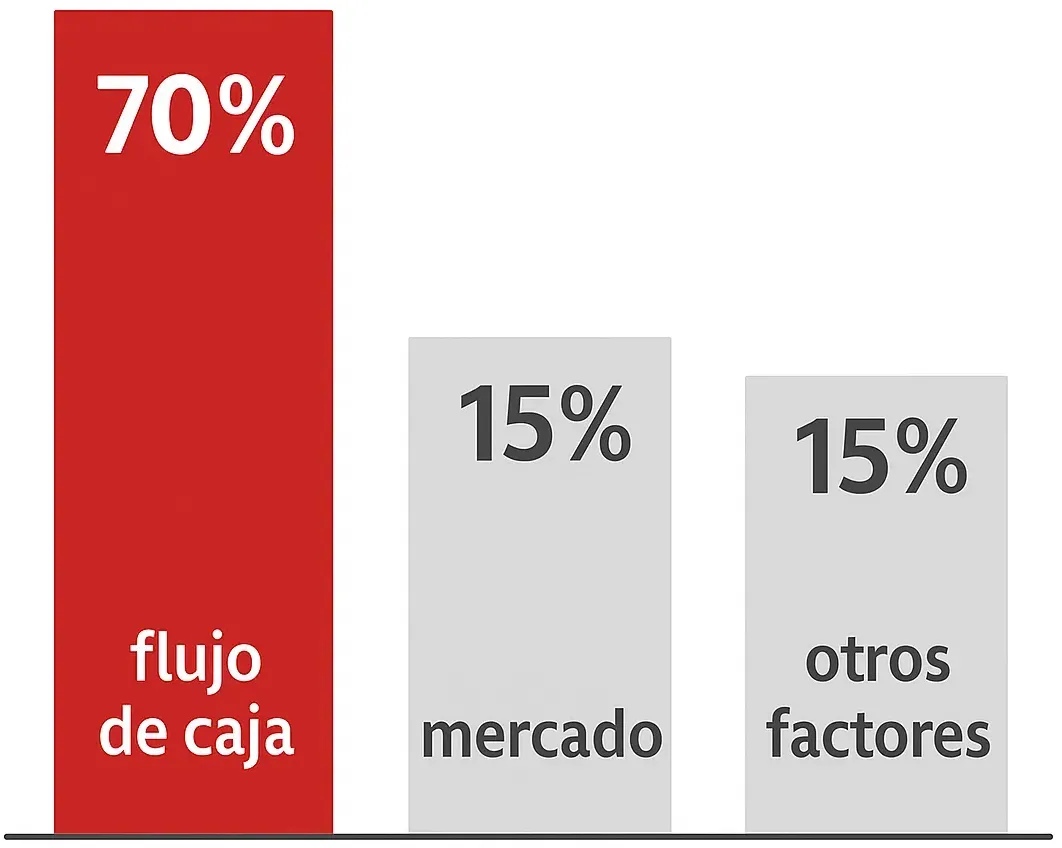
In other words, it is not the international price or the lack of customers that kills businesses the most, but the lack of control over productivity and the associated financial planning.
💡How Technology Changes the Story
Until recently, estimating production was "by eye." Today, with AI, computer vision applied to agriculture, and some other innovative technologies, this has changed.
For example, at Tecde, we created HarVis, a solution that converts simple videos into reliable data to predict productivity.
What does HarVis do?
Evaluates maturity, fruit counting, and phytosanitary status.
Generates projections for planning harvests and sales.
Reduces losses due to impurities, overcosts, and poorly scheduled logistics.
How does it work?
Operators record videos from the farm → the system analyzes them → delivers precise indicators and actionable insights (+90% accuracy in real scenarios).
What can you do starting today?
1. Centralize information: keep a clear record of your lots and production.
2. Establish control points: don't wait until harvest to measure.
3. Use tools and take advantage of them: it's not just about collecting data, but about turning it into decisions.
Start today: Organize your data, measure before the harvest, and turn information into decisions that generate profitability.